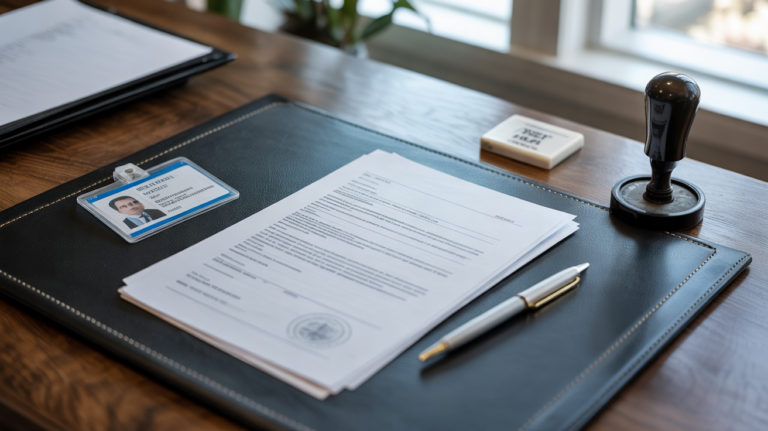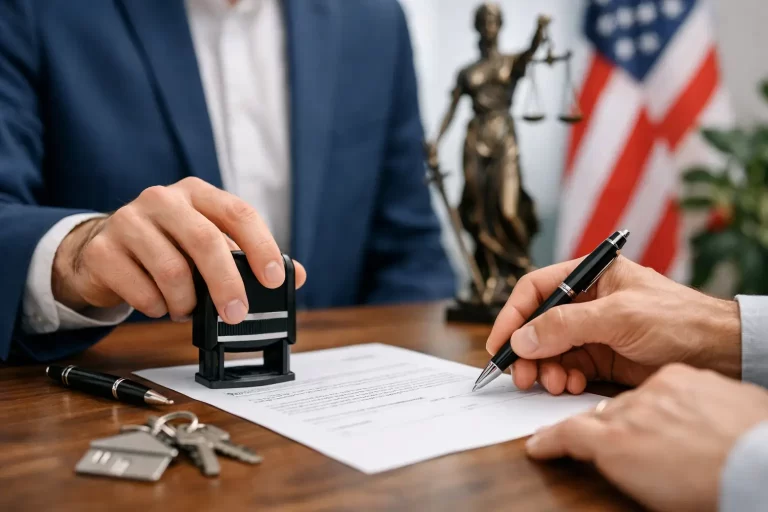

Notarization sounds like a formality. Yet it decides whether some of the most important paperwork you sign will hold up. A county office can reject a deed without a notary stamp. A bank can refuse a power of attorney. Still, most of the paper crossing a kitchen table needs no notary at all.
This guide sorts the confusion into three plain buckets. First come the documents that truly require a notary. Next come the ones where a notary is smart but optional. Last come the common forms people wrongly assume need a stamp.
It helps anyone preparing to sign something that matters. That includes new homeowners, business owners, and people setting up estate plans. It also helps anyone filing with a government agency. Knowing the category first saves a wasted trip and sometimes a real headache.
The short list of documents that truly require a notary
The mandatory list is shorter than most people expect. It centers on paper that gets recorded publicly, grants broad authority, or swears to the truth under oath.
Real estate leads the group by volume. Deeds must be notarized before a county recorder will accept them. Lenders also require notarized signatures at a mortgage closing. Recorded instruments depend on that stamp to enter the public record cleanly.
A power of attorney sits close behind. It gives another person significant control over your affairs. For that reason, notarization is almost always required before banks and third parties will honor it. Sworn statements round out the core group. Affidavits and declarations carry a notary’s oath that the signer stands behind the contents.
Documents where a notary is smart but not always required
A second group lands in a gray zone. State law may not demand a notary. Still, skipping one invites trouble later. The right choice often depends on your state and the institution receiving the paper.
Estate planning fills most of this bucket. A will itself usually needs witnesses, not a notary, to be valid. The notary earns a role through the self-proving affidavit, covered in its own section below. Trusts, trust amendments, and advance healthcare directives commonly carry notarization or witnessing rules that vary by state.
Vehicle titles show the clearest split. When selling, gifting, or inheriting a vehicle, some title transfers may require notarization depending on the state. Leases follow a similar pattern. A lease that will be recorded with the county always requires notarization. An ordinary residential lease generally does not.
Bank policy beats statute. Even where no law demands it, a bank may insist on a notarized signature for a large account change or a beneficiary designation. Call ahead and ask what the receiving party actually needs.
Documents that usually need no notary at all
Plenty of important paperwork is binding the moment you sign. Adding a notary wastes time and money without adding legal weight. Knowing this list keeps you from over-notarizing out of caution.
Ordinary contracts top the list. Most contracts become binding once the parties sign, with no notarization needed. That covers service agreements, nondisclosure agreements, offer letters, and purchase orders. A promissory note is a telling example. In a mortgage closing, the security instrument gets notarized. The note itself is signed but not notarized.
Government filings surprise people most. USCIS does not require notarization for document translations. That rule is rooted in federal regulation 8 CFR 103.2(b)(3). The agency wants a certified translation, which confirms accuracy. It does not want a notarized one, which only confirms the signer’s identity. A notarized translation may be requested in other contexts. Still, it is not required by USCIS.
A document is more legally valid once it has a notary stamp.
A notary verifies identity and the signing act. It does not make an otherwise unenforceable document valid. Most contracts are binding on signature alone.
Jurat vs. acknowledgment: why the notary act changes the rules
Two notarial acts cover nearly every notarization you will ever request. Which one applies decides whether you can sign ahead of time or must sign in front of the notary. Confusing them is a frequent cause of rejected paperwork.
An acknowledgment confirms identity and willing intent. For an acknowledgment, the document may be signed before you appear. Still, you must appear in person so the notary can verify your signature. Recordable documents, loan agreements, and powers of attorney typically call for acknowledgments.
A jurat goes further. With a jurat, the signer must sign the document in the notary’s presence. The signer then takes an oath or affirmation about the truth of its contents. Jurats are common on affidavits and depositions. The two acts use different certificate wording, and one cannot substitute for the other.
| Document | Notary needed? | Typical act |
|---|---|---|
| Deed or property transfer | Yes | Acknowledgment |
| Power of attorney | Yes | Acknowledgment |
| Affidavit or sworn statement | Yes | Jurat |
| Vehicle title transfer | Some states | Acknowledgment |
| Standard business contract | No | None |
| USCIS translation | No | None (certification instead) |
The will trap: notarized is not the same as self-proving
Estate planning hides a trap that costs families time in probate. A notary stamp on a will does little on its own. The value comes from a separate sworn statement called a self-proving affidavit.
Notarizing a will alone does not make it self-proving in most states. The self-proving affidavit requires the witnesses, not just a notary, to sign sworn statements about what they observed. A self-proving will lets the probate court accept the will’s validity without calling the witnesses to court. That saves your executor from tracking down witnesses years later.
In most states the affidavit must be notarized, signed in front of a notary who also signs and stamps it. A few states instead allow witnesses to sign under penalty of perjury. The option is not universal. A self-proving will is available in every state except the District of Columbia, Maryland, Ohio, and Vermont.
- Execute the will first. Sign it under your state’s witnessing rules before touching the affidavit.
- Gather two disinterested witnesses. Choose adults who are not beneficiaries, since many states bar interested witnesses.
- Appear before the notary together. The witnesses sign the sworn statement in front of the notary, who then notarizes it.
How to confirm what your document needs before you sign
A few checks up front prevent a wasted trip and a rejected form. The document and the receiving party usually tell you everything you need.
Start with the page itself. Documents that require notarization usually say so clearly, leaving space for the notary’s signature and seal. That notary block also hints at the act. Acknowledgment wording reads like “personally appeared and acknowledged.” Jurat wording reads like “subscribed and sworn to before me.”
Then confirm the details. Bring the original, complete document, since photocopies or incomplete forms may be rejected. Ask the recorder, lender, or agency whether it wants a notarized signature or something else, such as a certified translation. A quick call settles most of these questions in minutes.
Rule of thumb. If the document will be recorded publicly, grants broad authority to another person, or swears to facts under oath, expect to notarize it. Otherwise, your signature alone usually does the job.
Notarization protects the documents where identity and intent carry real stakes. Deeds, powers of attorney, and sworn affidavits sit firmly in the mandatory group. Estate and vehicle paperwork lands in a gray zone. It depends on your state and the party receiving it.
Most contracts, meanwhile, need nothing more than a signature. Government filings add their own twist, since agencies such as USCIS ask for certification rather than a notary stamp. The act matters too. An acknowledgment lets you sign ahead, while a jurat requires signing in front of the notary.
When the stakes are high, confirm the requirement with the receiving party before you sign. A short question answers what a stamp can and cannot do. That keeps your paperwork moving instead of bouncing back.
Key takeaways
- Deeds, powers of attorney, and sworn affidavits almost always require a notary; most ordinary contracts do not.
- An acknowledgment lets you sign beforehand, while a jurat requires signing in front of the notary under oath.
- A notarized will is not automatically a self-proving will, which also needs the witnesses to sign sworn statements.
- USCIS wants a certified translation, not a notarized one, under 8 CFR 103.2(b)(3).
- Check the document’s notary block and ask the receiving party before you make the trip.
Does a contract have to be notarized to be legally binding?
No. Most contracts bind the parties the moment they sign. Notarization is generally reserved for documents that get recorded publicly, grant broad authority to another person, or swear to facts under oath.
Do you need a notary for your will?
In most states a will is valid with witnesses and no notary. A notary comes in for the self-proving affidavit. That affidavit lets the probate court accept the will without calling your witnesses to testify.
Will a notary tell you whether to pick a jurat or an acknowledgment?
No. That choice belongs to you, the signer. A notary may explain the difference between the two acts, then let you decide which one your document needs.
Do your USCIS translations need to be notarized?
No. USCIS asks for a certified translation that confirms accuracy, not a notarized one. The rule sits in 8 CFR 103.2(b)(3). Notarization only verifies the translator’s identity and adds nothing USCIS requires.
Does a vehicle title transfer need a notary?
It depends on your state. Some states require a notarized signature when selling, gifting, or inheriting a vehicle, while others do not. Check your state’s motor vehicle agency before signing the title.
Sources
- Legal Information Institute, Cornell Law School. Self-Proving Will. law.cornell.edu
- National Notary Association. The Difference Between Acknowledgments and Jurats. nationalnotary.org
- U.S. Citizenship and Immigration Services regulation, 8 CFR 103.2(b)(3). Translation requirements. ecfr.gov
- Nolo / AllLaw. Making a Self-Proving Will With a Self-Proving Affidavit. alllaw.com
- Notary Public Underwriters. Back to the Basics: Types of Notarial Acts. notarypublicunderwriters.com