
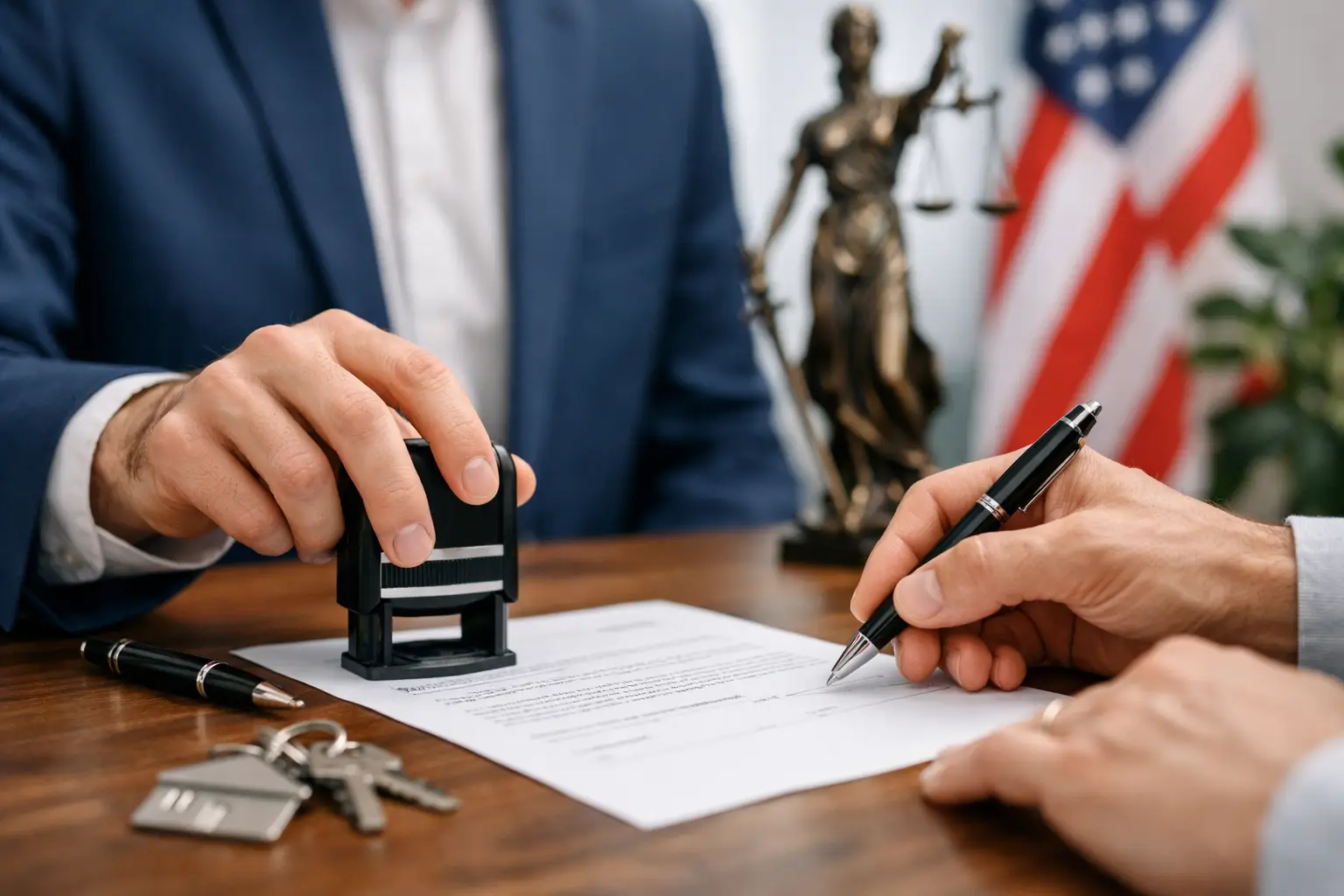
A power of attorney usually gets signed when something serious is happening – a parent needs help, a closing is coming up, a medical issue has changed the timeline, or a business owner needs someone else to act quickly. In those moments, one of the most common questions is where to notarize power of attorney without wasting time or risking a rejected document.
The short answer is that you can often notarize a power of attorney at a local notary office, certain banks, shipping stores, law offices, real estate offices, hospitals, nursing homes through mobile notaries, or through remote online notarization where state law allows. The better answer is that the right place depends on the type of power of attorney, your state’s rules, the signer’s condition, and whether witnesses are also required.
Where to notarize power of attorney
If the signer is alert, willing, and able to appear before a notary, the easiest option is often a local notary service. That may be an independent notary, an accounting office that offers notary services, a legal document office, or a mobile notary who meets you at home, work, a hospital, or a care facility.
Banks and credit unions can also be a practical choice, especially if you already have an account there. Some provide notary services for customers at little or no cost. The limitation is availability. Not every branch has a commissioned notary on site every day, and some banks will not notarize certain estate-planning documents unless all requirements are very clear.
Shipping and office service stores are another common option. They are convenient and often have extended hours, which helps when timing is tight. Still, convenience should not be confused with suitability. If the power of attorney involves multiple signers, witnesses, or questions about identification, a more experienced notary may save you from having to redo the document.
Law offices can be a strong choice when the power of attorney is part of estate planning, elder care planning, or a business transaction. They are more likely to spot document issues before the notarization happens. The trade-off is cost and scheduling. You may pay more than you would at a basic walk-in location.
For signers who cannot travel, mobile notary service is often the best fit. This is especially true for seniors, hospitalized patients, people in rehab, and business owners who need documents handled at their office. A mobile notary comes to the signer, which reduces stress and makes it easier to coordinate family members or witnesses in one visit.
Remote online notarization may also be available depending on your state and the state where the document will be used. This option can be fast and efficient, but it is not universal. Some institutions still prefer wet signatures on paper, and some power of attorney documents are better handled in person because capacity and willingness must be clear.
The best place depends on the document and the signer
Not every power of attorney is the same. A financial power of attorney used for banking, tax matters, or real estate may have different acceptance standards than a medical or limited power of attorney. Some states require notarization. Others may also require witnesses. If you skip a required step, the document may be signed but still unusable.
That is why the question is not only where to notarize power of attorney, but also whether the document has been prepared correctly for its intended use. A notary verifies identity and witnesses the signing. A notary does not usually tell you which type of power of attorney you need or whether the wording meets your legal goal.
If you are dealing with a parent’s finances, an IRS matter, access to accounts, or authority to sign for a business, it is worth confirming the document requirements before the appointment. That one step can prevent a bank, title company, or government agency from rejecting it later.
What a notary will check
The notary’s job is narrower than many people expect. They will generally confirm the signer’s identity, make sure the signer appears willing, and determine whether the signer seems aware of what they are signing. If the signer is heavily medicated, confused, pressured by others, or unable to communicate clearly, the notary may refuse to proceed.
This matters most in hospital rooms, rehabilitation centers, and elder care settings. Families often assume urgency will override the rules. It does not. If the signer cannot demonstrate awareness, notarization may not be possible that day. In sensitive situations like these, an experienced mobile notary is often the most practical choice because they are used to handling timing, privacy, and facility coordination.
What to bring to the appointment
Bring the unsigned power of attorney unless you have been specifically told otherwise. The signer should have a current, acceptable government-issued photo ID. If witnesses are required, confirm whether you need to bring them or whether the notary service can help arrange them.
You should also know the exact name that must appear on the notarization and whether the receiving institution has any special requirements. Some banks and agencies are strict about names, initials, and document formatting. A small mismatch can create a big delay.
Common places people run into problems
The most common problem is showing up at a convenient location that is not prepared for the actual document. A store notary may be available, but they may not provide witnesses. A bank may have a notary, but only for account holders or only during limited hours. A hospital may allow notary visits, but access rules, patient schedules, and medical condition can make the timing difficult.
Another issue is assuming every state handles powers of attorney the same way. They do not. Execution rules, remote notarization rules, and witness requirements vary. If the power of attorney will be used in another state, or for a specific institution, confirm acceptance standards before signing.
People also run into trouble when the signer has already signed the document before meeting the notary. In many cases, the notary needs to witness the signature or receive a proper acknowledgment directly from the signer. If that process is not handled correctly, the notarization may not be valid.
When mobile notary service makes the most sense
A mobile notary is often the right answer when the signer cannot drive, the family is coordinating a sensitive situation, or the document needs to be completed without the chaos of waiting rooms and branch schedules. It can also help when a small business owner needs a document notarized at the office between meetings instead of losing half a day traveling.
This option is especially useful in Gwinnett County communities like Dacula, Lawrenceville, Buford, and Duluth, where traffic, work schedules, and family responsibilities can make a simple errand harder than it sounds. For clients already juggling tax issues, bookkeeping cleanup, or urgent financial paperwork, saving time matters.
An experienced provider can also flag practical issues before the visit, such as whether the signer has proper ID, whether witnesses are needed, and whether the setting is appropriate for notarization. That kind of preparation reduces failed appointments.
How to choose the right notarization option
If the signer is healthy, mobile, and has standard ID, a local office, bank, or shipping store may be enough. If the document is tied to estate planning, major assets, or legal complexity, a law office or a highly experienced notary may be the safer route. If the signer is in a hospital, care facility, or homebound, mobile service is usually the most practical and least stressful option.
If speed is the main concern, call ahead before going anywhere. Ask whether they notarize powers of attorney, what identification they accept, whether witnesses are required or available, what the fee will be, and whether the document can be signed there. Five minutes on the phone can save hours of backtracking.
For people who want direct guidance instead of guesswork, working with a professional office that handles notary services as part of a broader client support model can make the process smoother. Cheralis Financial serves clients who need clear answers, responsive help, and practical problem-solving, especially when documents connect to larger financial or tax matters.
A notarized power of attorney is supposed to create clarity, not more friction. The best place to get it done is the one that matches the signer’s situation, follows your state’s rules, and gets the document accepted the first time.