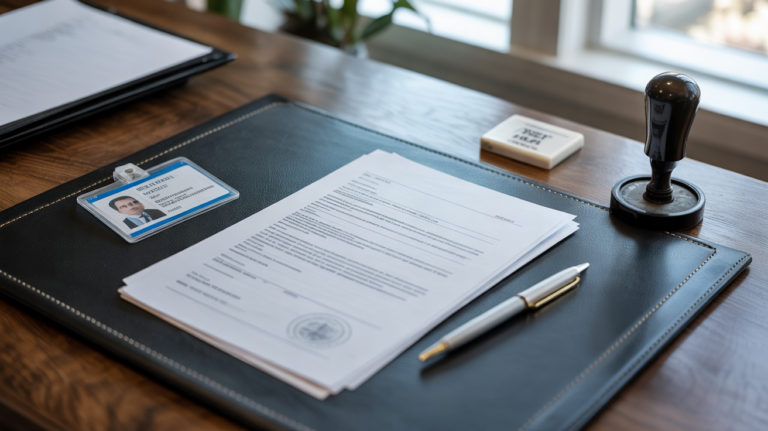
A notary public is a state-appointed official. The notary acts as an impartial witness when you sign an important document. The role sounds small, yet it carries real weight. A deed, a power of attorney, or an affidavit often cannot move forward without it.
This guide explains what notarization proves and where its limits sit. You will see the acts a notary performs. You will also see the identity checks they run and the acts they are barred from doing. The difference between an acknowledgment and a jurat gets a plain walkthrough too.
This helps anyone heading to a bank, a shipping store, or a mobile notary with paperwork. It also helps small business owners signing contracts and families handling estate documents. Knowing the role saves a wasted trip. It also protects you from someone overstepping their authority.
What a Notary Public Actually Does
At its core, the job is fraud deterrence through an impartial witness. A notary public is an official appointed by a state government to serve the public as an impartial witness. The notary administers oaths and performs other official acts when important documents are signed. The powers come from the state, not from the notary personally.
The duties are focused and consistent across states. Notaries help deter fraud, confirm that signers of documents understand the document they’re signing, and verify that each signer is signing willingly and freely. That is the whole purpose of the seal.
States create the role by statute. In Michigan, for example, a notary public is an officer appointed by the Michigan Secretary of State to attest to the authenticity of a person’s signature. The same officer may administer oaths and witness acknowledgements. The volume is large too. In fact, the total number of notaries public currently commissioned in the State of Michigan is more than 113,000.
What Notarization Proves (and What It Does Not)
This is the part people get wrong most often. A notary vouches for the signing event. The notary never vouches for the paper itself.
The seal confirms a narrow set of facts. Notarization on a document certifies that the person named on it appeared before the notary and displayed valid identification. It also certifies that the signer was in the presence of the notary at the time of execution. That presence rule is strict. The signer must be physically in front of the notary during the act.
Yet the notary does not read your document for accuracy. The notary does not approve its terms either. As one state manual puts it plainly, jurat notarizations do not prove a document is true, legal, valid or enforceable. In short, notarization proves who signed, not what the document says.
The legal weight is still meaningful, though. In Texas guidance, the signature and seal of a Notary Public do not prove these facts conclusively, but provide prima facie proof of them. They also let people in trade and commerce rely on the notary as a neutral third party. That third party has no personal interest in the deal. So a recorder or a bank can trust the signing without having watched it.
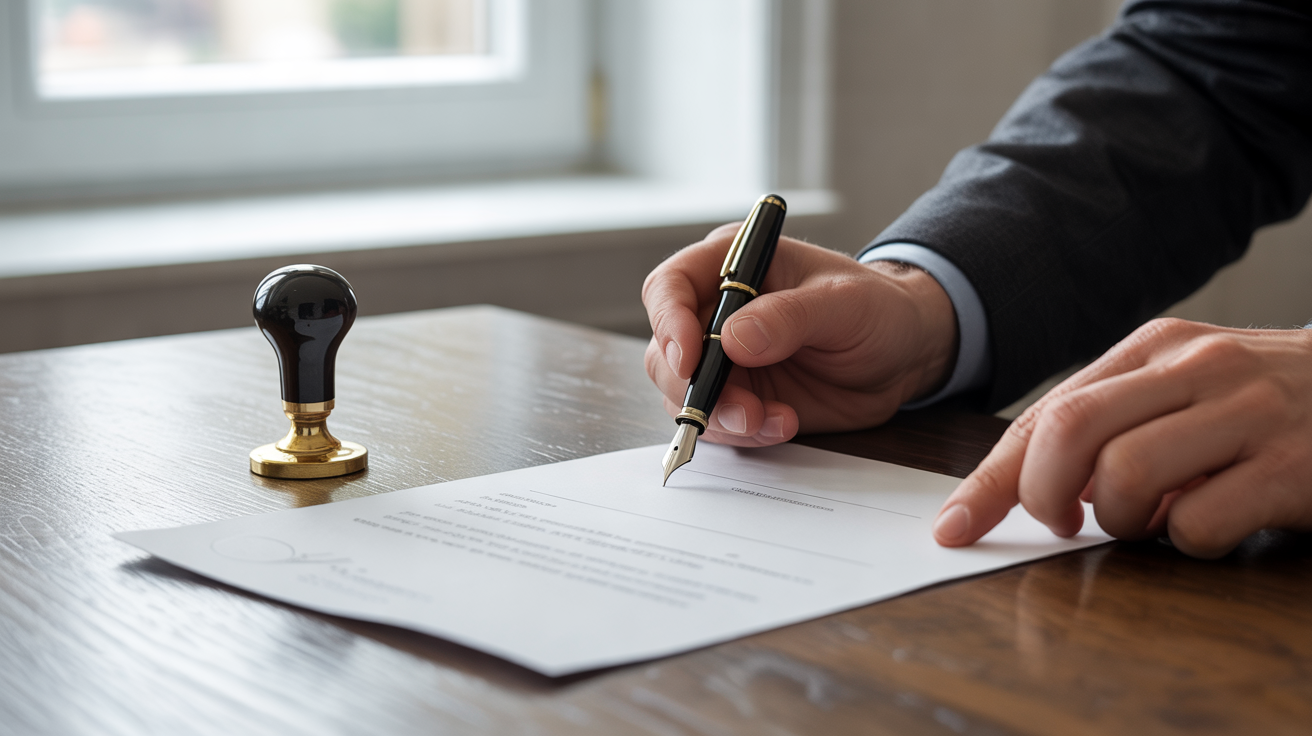
Figure 1. A notary vouches for the signing, not for what the document says.
Plain definition. Notarization is a formal act. An impartial official confirms a signer’s identity and willingness, then records the act with a signed, sealed certificate. It does not judge the content.
Acknowledgment vs. Jurat: The Two Common Acts
Most notarizations fall into two types. The document usually tells you which one it needs. The difference matters, because one involves an oath and the other does not.
An acknowledgment confirms a willing signature. An acknowledgment is a notarial act in which a person confirms to a notarial officer that the person signed a particular document of their own free will. The signer also confirms knowledge of the contents and effects of the document. Here, you may sign before you arrive. The notary simply confirms the signature is yours.
A jurat adds a sworn oath about truth. A jurat is a notarial act in which a person declares to a notarial officer that a written document is truthful. The person signs that document in the officer’s presence. For a jurat, timing changes. As one guide notes, you generally should not sign the document before you arrive. With a jurat, the notary needs to witness your signature.
The choice follows the document type. Documents requiring an acknowledgment notarial act typically contain terms or conditions that the named document signer is agreeing to. Documents requiring a jurat typically contain information or statements provided as facts.
| Feature | Acknowledgment | Jurat |
|---|---|---|
| Oath or affirmation | No oath required | Oath required |
| When you sign | Before or during the visit | In front of the notary |
| Typical use | Deeds, contracts, powers of attorney | Affidavits, sworn statements |
| What it confirms | Willing signature | Sworn truth of contents |
What a Notary Public Cannot Do
The limits are as important as the powers. A notary who oversteps can invalidate a document or expose everyone to risk. Several rules apply almost everywhere.
First, a notary is not a lawyer. Notaries public in the U.S., of which the vast majority are lay people, require only a brief training seminar. They are also barred from acts that resemble the unlicensed practice of law. The one exception is a qualified attorney. So that means no legal advice and no choosing your document type.
Second, conflicts of interest are off-limits. Under Pennsylvania law, a notary public may not perform a notarial act with respect to a record in which the notary has a direct or pecuniary interest. The same bar applies when the notary’s spouse holds that interest. A notary also cannot notarize their own signature.
Third, backdating is prohibited. The certificate must carry the true date. A notary cannot sign and date as if the act happened earlier. Blank spaces are a problem too. Completing an act on an incomplete page defeats the fraud-prevention purpose.
Finally, refusal has rules. A notary should not reject work based on disagreement with the content. Instead, valid reasons for refusal include a signer who cannot prove their identity. Refusal is also proper if a signer appears to be under duress or lacks mental capacity. An incomplete document or a notary’s personal interest counts too.
Watch the title. A US notary is not the same as a Latin-American official. In many states a non-attorney notary may not use the term “notario” or “notario público” in advertising. The phrase misleads people into expecting legal help a notary cannot provide.
How a Notarization Session Works
Knowing the sequence helps you arrive ready and avoid a second trip. The steps run in the same order almost everywhere.
- Appear in person. The signer must be physically present. The notary has to observe and interact with you directly.
- Prove identity. Bring a current photo ID such as a driver’s license or passport. The notary inspects it before anything else.
- Confirm willingness and awareness. The notary checks that you understand the document and sign freely, not under pressure.
- Sign or acknowledge. For a jurat you sign in front of the notary under oath. For an acknowledgment you confirm the signature is yours.
- Complete the certificate. The notary fills in and seals the proper certificate wording. A notarization is not complete without it.
That certificate step is not optional. As one state update warns, a notarization is not complete without a proper notarial certificate. A notary should NEVER simply stamp a document with their seal.
Remote Online Notarization and Modern Options
In-person signing is the tradition. Yet many states now allow a video-based alternative. The rules are specific, and they protect the same fraud-prevention goal.
Remote online notarization replaces physical presence with technology. With remote online notarization, the legal requirement that the signer personally and physically appear before the notary is met by the use of audio-visual electronic communication technology. The notary still identifies you and watches you sign. The difference is the screen.
Adoption has grown quickly. Over 43 states have enacted permanent statutes authorizing state-commissioned notaries to perform remote online notarization. Requirements vary by state, and some impose real safeguards. In Florida, for instance, the Florida Department of State requires online notaries to complete specialized education and register their chosen technology vendors. They must also carry a $25,000 bond and errors and omissions insurance before performing online acts.
Location rules still bind the notary. When performing a remote online notarization, the Notary must always be physically located within the commissioning state during the notarization, regardless of the signer’s location. Some states, including California, let residents use out-of-state remote notaries. These states do not yet commission their own online notaries.
A notary makes a weak or unfinished document legally valid.
Notarization adds authentication of the signing. But it does not make an otherwise invalid document valid.
Conclusion
A notary public plays a narrow but trusted part in everyday paperwork. The seal confirms that a named person appeared, proved their identity, and signed willingly. It does not confirm that the document is true, legal, or enforceable.
That distinction protects you. When you understand it, you know to bring valid ID. You also know to appear in person or join a compliant video session. You should also expect no legal advice from a non-attorney notary. Finally, you know when a refusal is proper and when the title “notario público” signals a warning.
Documents such as deeds, powers of attorney, and affidavits move smoothly once notarized correctly. Matching the right act to the right document keeps a transaction from stalling. Good preparation turns a quick appointment into a clean, finished record.
Key takeaways
- A notary is an impartial, state-appointed witness whose main job is deterring fraud.
- Notarization proves who signed and that they signed willingly, not that the document is true or legal.
- An acknowledgment confirms a willing signature; a jurat adds a sworn oath about truth.
- A non-attorney notary cannot give legal advice, backdate, or notarize a document they have an interest in.
- Remote online notarization is now permanent in most states, with the notary located in the commissioning state.
Does a notary read the document you are signing?
Generally no. A notary is not required to read your document and usually should not review its contents. The job is to verify your identity and confirm you are signing willingly. It is not to judge the document’s accuracy or legality.
Can a notary give you legal advice?
Not unless the notary is also a licensed attorney. A non-attorney notary is forbidden from anything resembling the unlicensed practice of law. That includes advising you on your document or choosing which notarial act applies.
Can a notary refuse to notarize your document?
A notary cannot refuse simply because they dislike the content. Valid reasons to refuse include a signer who cannot prove identity, appears to be under duress, or lacks mental capacity. An incomplete document or a conflict of interest also counts.
Do you have to appear in person to get something notarized?
Yes, in some form. Traditional notarization requires physical presence. Remote online notarization is now permitted in most states. It meets the presence requirement through approved audio-visual technology instead.
Why is “notario público” treated as a warning in the US?
In many countries a notario público is a trained lawyer. A US notary is not. Many states bar non-attorney notaries from using that phrase in advertising. It misleads people into expecting legal services a notary cannot provide.
Sources
- National Notary Association. What is a Notary Public? nationalnotary.org
- Michigan Department of State. Notary services. michigan.gov
- Texas Secretary of State. Notary Public Educational Information. sos.state.tx.us
- Pennsylvania Department of State. Powers of a Notary Public; Electronic or Remote Notarization. pa.gov
- Indiana Secretary of State. 2020 Indiana Notary Public Update. in.gov
- Notary Public Underwriters. The Difference Between Acknowledgments and Jurats. notarypublicunderwriters.com